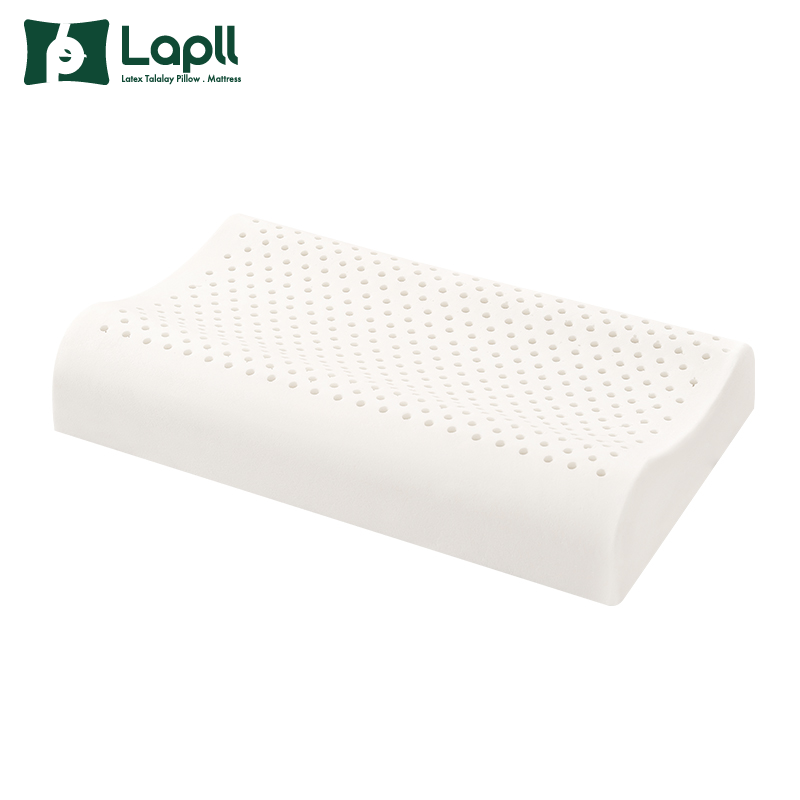
Born in 1929, the Dunlop process is the oldest and most mature manufacturing method for latex products. Its core workflow: natural latex liquid is mixed with vulcanizing agents and foaming agents, mechanically whipped to create bubbles, then poured into a mold and sent into a steam vulcanization oven, where it is baked at high temperature to set its shape. The entire foaming process relies on chemical foaming agents to generate air bubbles, which rise and solidify naturally within the mold.
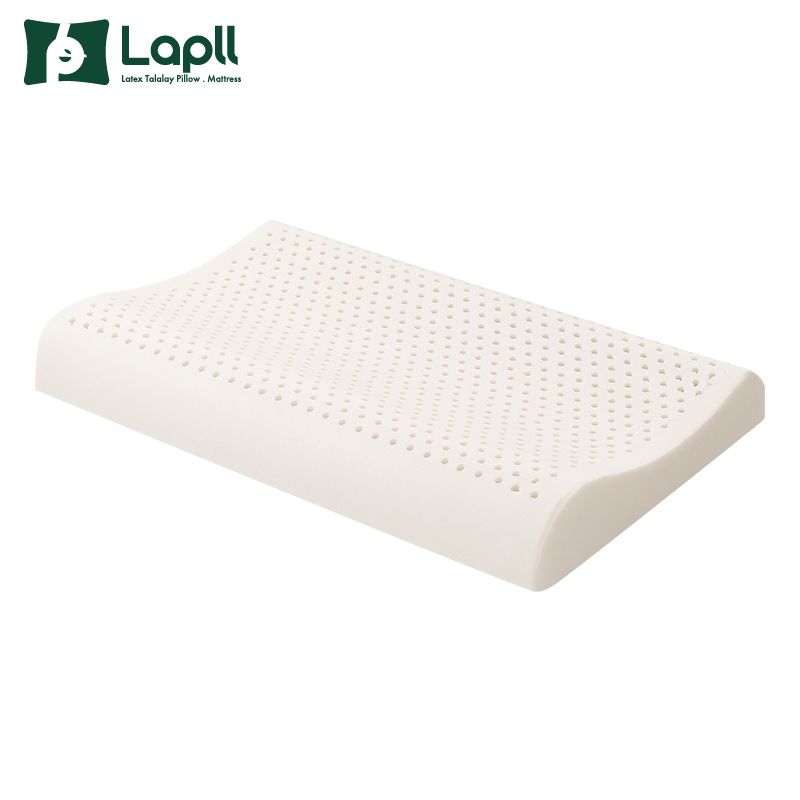
Because the bubbles are generated chemically with no secondary processing, the cell structure of Dunlop Latex Products is not uniform—the bottom is typically denser than the top—and the overall feel is firm and solid, with strong support. This makes the Dunlop process a great fit for a Talalay Latex Mattress alternative when firmer support is preferred, or for a durable Latex Topper that adds a solid base layer.
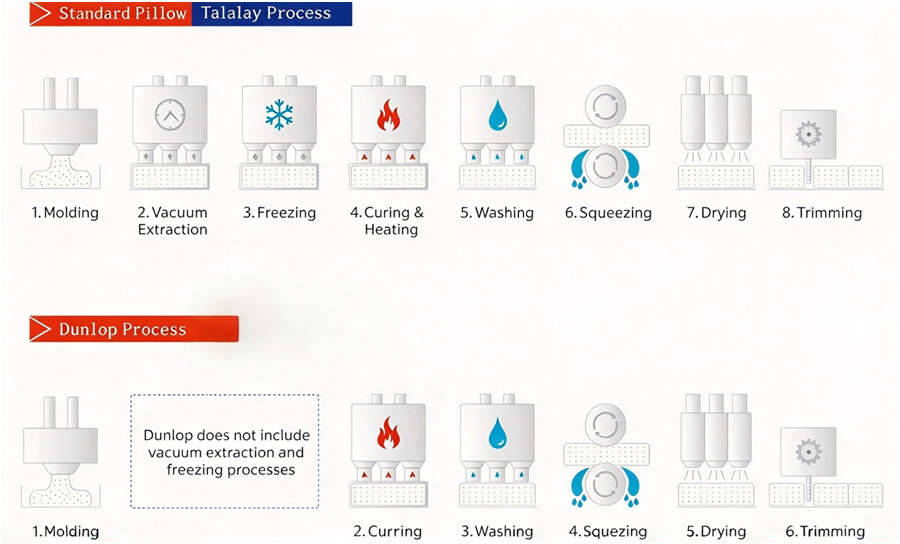
The Talalay process, introduced in 1941, is a revolutionary upgrade built upon Dunlop. Its workflow adds two critical steps: vacuuming and freezing. The latex liquid fills only 30%–50% of the mold; a vacuum is then applied so the foam expands evenly under negative pressure to fill the entire mold. Next, it is rapidly frozen to −45°C to lock the bubble structure in place, before being transferred to a slow-baking oven for low-temperature curing.
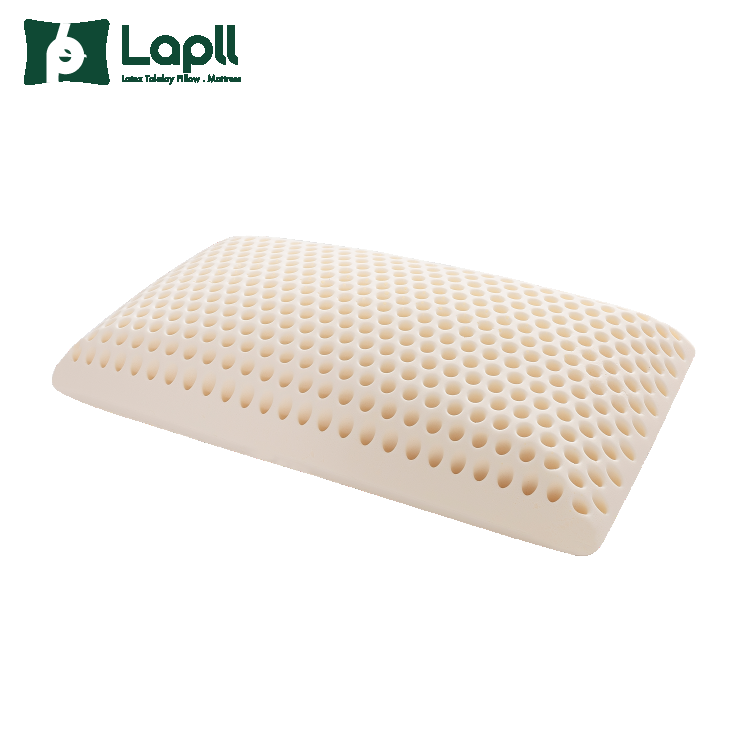
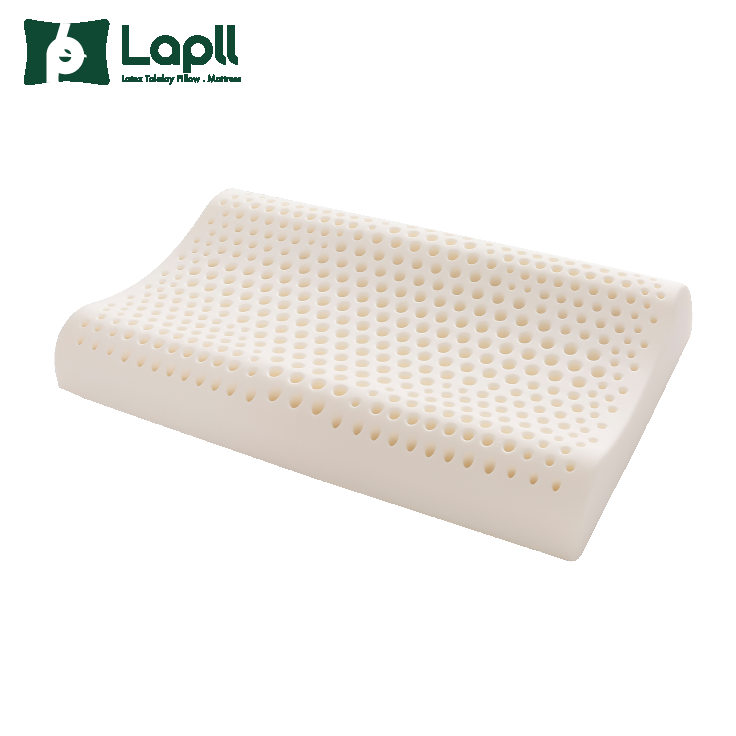
It is precisely these two steps—vacuum expansion and freeze-locking—that give Talalay latex its uniform honeycomb open-cell structure. The cells are consistent in size and interconnected, delivering superior elasticity and breathability, along with a softer, bouncier, more "Q-springy" feel. This is why a Talalay Latex Pillow is often the top choice for sleepers who want contouring comfort, and why Shredded Talalay Latex is used in adjustable pillows for personalized loft.
| Comparison Dimension | Talalay Process | Dunlop Process |
|---|---|---|
| Foaming method | Vacuum expansion + freeze-locking | Chemical foaming agent, whipped to rise |
| Cell structure | Uniform honeycomb open cells, consistent size | Non-uniform cells; denser at the bottom |
| Feel | Soft and springy, strong contouring wrap | Firm and solid, strong support |
| Breathability | Excellent (high open-cell ratio allows airflow) | Moderate (more closed cells, average airflow) |
| Elasticity & rebound | Fast rebound, high conformity | Slower rebound, delayed shape recovery |
| Production cost | Higher (more steps) | Lower (mature process) |
LAPLL works in deep partnership with a factory that has 27 years of OEM manufacturing experience, offering latex pillows in both Talalay and Dunlop processes. Our range covers Talalay Latex Pillow , Talalay Latex Mattress , Shredded Talalay Latex , Customized Hybrid Latex , Latex Topper , and Dunlop Latex Products . We don't believe in "one process fits all"—instead, we recommend the solution that best matches each customer's actual sleep feel and budget. Because we're professionals, we can stay objective.
 Languages