
 Languages
From the "Tears" of Rubber Trees to the Sleep Industry: A Century-long Journey of Latex Pillows and Mattresses
Origin: The Glamorous Transformation of Rubber Tree Sap
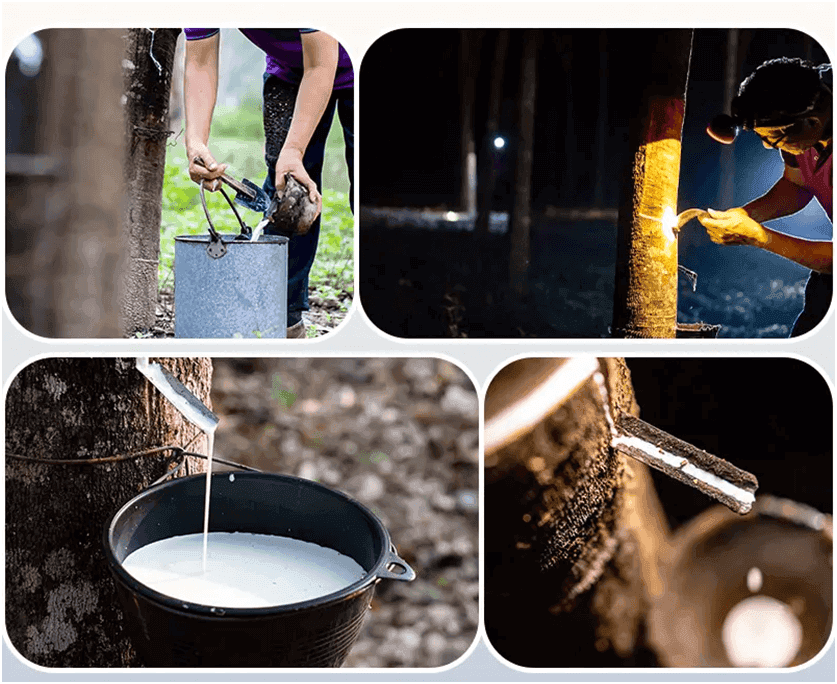
The raw material for latex bedding is natural latex — a milky white sap that flows out when the bark of a rubber tree is cut. First discovered in South America, it is known as the "tears of the tree". Humans used rubber for padding a long time ago, but liquid latex coagulates easily and cannot be directly shaped. It was not until 1929 that E.A. Murphy, a scientist at Britain's Dunlop Company, developed latex foaming and vulcanization technology in a laboratory in Birmingham, successfully turning liquid latex into elastic foam for the first time. In 1931, the first latex mattress was launched in the UK, followed shortly by latex pillows , revolutionizing bedding materials. This marks the technical origin shared by global latex manufacturers including Lapll to this day.
History: Two Processes Lay the Technical Foundation
The century-long technical history of the latex industry is essentially the evolution of two process routes: Dunlop and Talalay. The Dunlop process features a simple workflow and delivers strong support. In the 1940s, the Talalay process added vacuum distribution and flash-freezing steps on this basis. It produces a more uniform cell structure for softer texture and better air permeability, yet comes with higher energy consumption and production cost, positioning it in the high-end market over the years.
The health benefits of latex have also been scientifically validated: In 1954, the Hygiene Institute of the University of Giessen in Germany confirmed that latex has powerful antibacterial properties. Further research by the Department of Microbiology at the University of Leeds, UK, in 1995 showed that Talalay latex can inhibit the growth of various bacteria, fungi and dust mites.
Commercial Evolution: The Rise and Fall of a Luxury Product and Globalization
During World War II, the Japanese occupation of Malaya disrupted latex supply, and Dunlop mattresses once required a doctor's prescription for purchase. After the war, latex bedding gained rapid popularity and became the preferred choice for high-end hotels and middle-class families across Europe and America from the 1950s to 1960s.
Nevertheless, cheap petroleum-based polyurethane foam rose in the 1960s-70s, and memory foam (originating from NASA technology) was commercialized in the 1990s, squeezing latex into a niche market. Starting in the 2000s, organic latex certification systems such as GOLS were established. Coupled with consumers' growing concerns over chemical fillers and sustainable materials, latex made a steady comeback. During this period, global manufacturing shifted eastward.
Founded in Zhejiang, China in 1997, Lapll emerged as one of China's earliest professional latex manufacturers, nearly synchronizing with the global latex revival. Over the subsequent nearly 30 years, Lapll grew from an explorer to an industry leader. Meanwhile, latex pillows and mattresses transformed from luxury goods for European aristocrats into mainstream wellness consumer products.
Outlook: Driven by Both Wellness and Sustainability
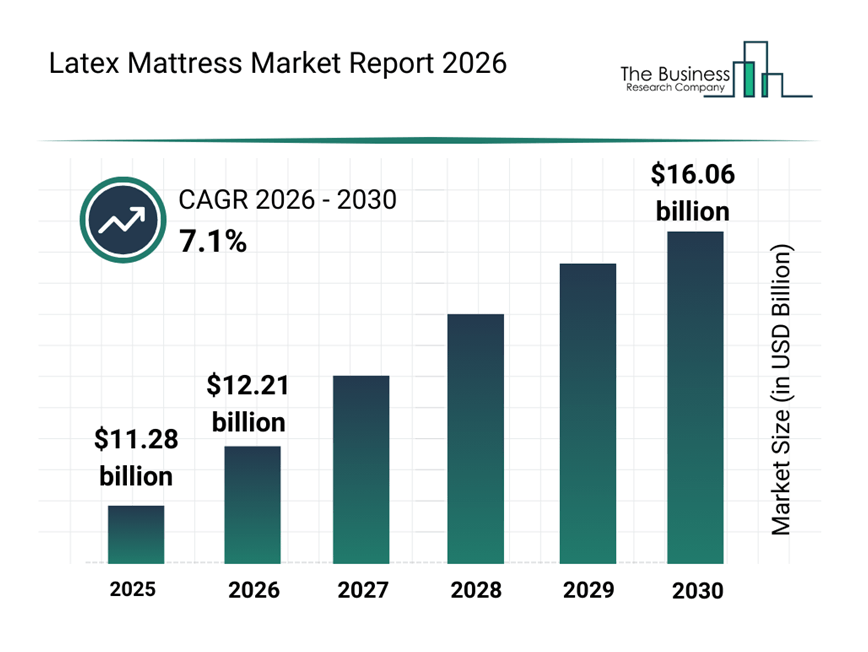
Industry statistics show that the global latex mattress market reached approximately USD 11.28 billion in 2025, and is projected to hit USD 16.06 billion by 2030, with a compound annual growth rate of about 7.1%. The Asia Pacific region represents the fastest-growing market.
Amid the upward industrial cycle, Lapll embodies the upgrade from Made in China to Intelligent Manufacturing in China. It adopts -45°C low-temperature physical foaming instead of chemical foaming agents, creating a honeycomb structure with an open-cell rate up to 99.9% and over 250,000 micropores per cubic inch. The product delivers 99.9% dust-mite and bacteria resistance with a high 93% natural latex content formula, and holds OEKO-TEX certification.
Its full product range includes bread pillows, contour pillows, children's pillows, zoned pillows, massage pillows, mattresses, shredded latex fillings and more. Customization of dimensions, density and logos is available. With 27 years of dedicated focus, Lapll proves that this "white gold" harvested from rubber trees will keep writing the next century's story in the human sleep health industry.